News

How Does a Stainless Steel Wall Mounted Laundry Drying Rack Make Everyday Drying Easier?

2026-09-23 0 Leave me a message


A practical guide to choosing, installing, loading, and maintaining a durable wall-mounted drying solution for modern laundry spaces.Stainless Steel Wall Mounted Laundry Drying Rack


1. Why Wall-Mounted Drying Changes the Laundry Space

Laundry areas are often expected to perform several jobs within a limited footprint. A washing machine, storage cabinet, utility sink, baskets, cleaning products, and drying equipment may all need to share the same room. A conventional floor-standing drying frame can provide useful hanging capacity, but it also occupies floor space precisely when the room needs it most.

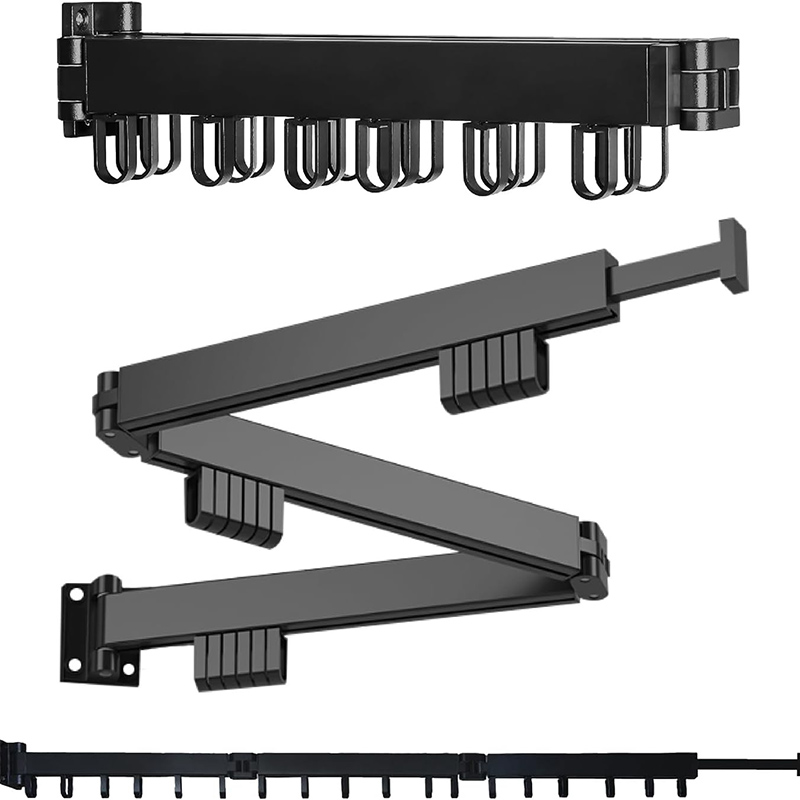
A wall-mounted structure approaches the problem differently. Instead of spreading across the floor, it uses vertical wall space and can remain folded, retracted, or compact when drying is finished. This makes the format particularly useful in apartments, compact utility rooms, balconies, bathrooms, service areas, and narrow laundry spaces.

The concept is simple, but the installation should not be treated as a decorative accessory. Wet clothing creates considerably more load than dry clothing, and the load is transferred through the rack into the wall fixing points. Some commercial drying systems therefore specify both a product load rating and requirements for suitable wall anchors or structural reinforcement. :contentReference


2. Why Stainless Steel Matters in a Humid Laundry Area

Laundry environments naturally involve water, condensation, detergent residues, and repeated cleaning. These conditions make material selection an important part of product life. Stainless steel is widely used for wall-mounted racks because it combines structural strength with good resistance to moisture and corrosion.

304 stainless steel is a common choice for indoor laundry equipment because it provides a useful balance between durability, corrosion resistance, appearance, and cost. Where the installation is exposed to more aggressive environmental conditions, the appropriate stainless steel grade and surface treatment should be considered according to the actual application.

Surface finish also matters. A smooth, properly finished stainless steel surface is easier to wipe and less likely to retain moisture and dirt. Stainless steel wall-mounted storage equipment is also used in demanding environments where cleanability and corrosion resistance are important, demonstrating why construction details matter alongside the material itself. :contentReference

Feature Why It Matters What to Check
Material Affects corrosion resistance and structural durability Specified stainless steel grade
Surface finish Influences appearance and ease of cleaning Smooth, consistent finish
Mounting plate Transfers the drying load to the wall Plate thickness, fixing holes and structure
Drying bars Determine hanging capacity and airflow Spacing, diameter and number of bars

3. What Makes a Drying Rack Practical for Daily Use?

A useful drying rack should solve several problems at once: it should provide enough hanging area, remain stable under its intended load, allow clothes to receive sufficient airflow, and avoid becoming an obstacle when it is not being used.

Product dimensions should therefore be considered together rather than separately. A rack that is extremely deep may provide more hanging room but can obstruct a narrow walkway. A compact model may save space but offer insufficient separation between garments. Adjustable or folding structures can address this balance by allowing the rack to expand during laundry and retract afterward.

  • Space efficiency: Uses available wall area rather than consuming permanent floor space.
  • Stable construction: Keeps the drying surface secure under the intended working load.
  • Useful bar spacing: Helps separate garments and encourages air movement.
  • Convenient operation: Makes opening, folding, extending, or retracting straightforward.
  • Easy cleaning: Smooth stainless steel surfaces can be wiped regularly without complicated maintenance.
  • Suitable mounting: The fixing method should correspond to the wall construction and expected load.

Existing products illustrate how widely capacity can vary. For example, one stainless steel wall rack specifies a drying capacity of 4–7 metres and a maximum load of 20 kg, while other folding systems specify different capacities according to their configuration. The important point is that load capacity should always be treated as a product-specific specification rather than an assumed property of every wall-mounted rack. :contentReference


4. How to Plan the Installation Before Drilling

Good installation begins before the first hole is drilled. Measure the available wall width, the distance from the floor, the maximum projection of the rack when opened, and the surrounding clearance. Consider how doors, cabinets, windows, washing-machine lids, and walkways interact with the extended rack.

Wall construction is equally important. Concrete, brick, solid timber, stud walls, and plasterboard do not provide the same holding strength. The fixing hardware must match the substrate. Manufacturers of wall-mounted drying products commonly state that different wall materials require different fixing devices. :contentReference

Pre-installation checklist
  1. Measure the available wall width.
  2. Measure the rack's maximum projection when open.
  3. Identify the wall construction.
  4. Locate studs or solid structural points where applicable.
  5. Confirm the manufacturer's stated load capacity.
  6. Choose anchors appropriate for the wall material.
  7. Check that the opened rack will not block doors or walkways.
  8. Confirm that the mounting surface is level and structurally sound.

5. How to Handle Wet Laundry Weight Safely

One of the most overlooked issues with drying racks is the difference between dry and wet laundry. Clothing absorbs water during washing, so the actual working load can be substantially higher than the weight of the garments before washing.

The load is not simply a vertical force. With a wall-mounted rack projecting away from the wall, the structure can create leverage at the mounting points. This means that the quality of the wall fixing and mounting plate is just as important as the strength of the drying bars.

Never assume that a stainless steel frame automatically means unlimited capacity. Follow the manufacturer's stated load rating, distribute garments across the available bars, and avoid concentrating very heavy wet items at the farthest point from the wall. Installation guidance for wall drying systems likewise emphasizes matching anchors to the wall and checking the mounting structure under realistic loading conditions. :contentReference

Loading practice Recommended approach
Daily clothing Spread garments across multiple bars.
Heavy towels Distribute weight instead of placing several heavy items together.
Large bedding Check the rack's rated capacity before loading.
Repeated heavy loads Inspect the mounting points periodically for movement or damage.

6. How to Improve Airflow and Drying Efficiency

A drying rack does not dry clothes simply because they are hanging above the floor. Air needs to reach the wet fabric. When garments overlap tightly, moisture remains trapped between layers and drying takes longer.

Bar spacing should therefore match the intended garments. Shirts, trousers, towels, and larger household textiles need enough separation to prevent excessive contact. Positioning also matters. A rack placed close to a ventilation source or in an area with natural air movement can provide a more effective drying environment than one installed inside an enclosed corner.

For a compact laundry room, a practical arrangement is to place the rack where air can circulate around both sides of the garments while keeping sufficient clearance from walls, cabinets, and other equipment. Folding the rack away after use can also restore circulation and usable space.


7. How to Install a Wall-Mounted Laundry Drying Rack

Exact installation procedures vary according to the product structure and wall material, so the supplied installation instructions should always take priority. As a general planning sequence, the following approach helps reduce common installation problems.

  1. Mark the mounting position. Use the required height and clearance dimensions and make sure the position is convenient for daily use.
  2. Check the level. A level mounting plate helps prevent uneven loading and gives the finished installation a cleaner appearance.
  3. Identify structural support. Determine whether the fixing points are going into masonry, timber, studs, or another suitable structural surface.
  4. Select compatible anchors. Anchor type and size should be appropriate for both the wall and the expected load.
  5. Secure the mounting plate. Tighten the fixing hardware according to the product instructions without damaging the wall or hardware.
  6. Check movement. Operate the rack before loading it and verify that hinges, telescopic sections, or folding components move correctly.
  7. Test gradually. Begin with a moderate load and observe the mounting points before using the rack at its rated capacity.

Wall-mounted products are particularly sensitive to the quality of the fixing surface. Some current commercial designs use four or more anchoring points and explicitly require reinforcement or suitable fixing systems for plasterboard installations. :contentReference


8. Common Installation and Usage Mistakes

Ignoring the wall structure

A strong rack cannot compensate for unsuitable anchors or a weak mounting surface.

Using the maximum load as a target

A rated maximum is a limit, not an instruction to load every garment in one concentrated area.

Blocking airflow

Overlapping wet clothes can slow evaporation and increase drying time.

Forgetting the folded position

Always consider how far the rack protrudes when folded as well as when fully extended.


9. How to Maintain Stainless Steel for Long-Term Use

Stainless steel requires relatively straightforward care, but regular cleaning is still worthwhile in a laundry environment. Water spots, detergent residues, dust, and other deposits should not be allowed to accumulate unnecessarily.

For routine cleaning, wipe the surface with a soft cloth and clean water. If additional cleaning is necessary, a mild detergent can generally be used, followed by removal of residue and drying of the surface. Product care guidance for stainless steel wall drying racks similarly recommends a soft cloth with water and mild washing-up detergent or soap where necessary. :contentReference

  • Wipe away detergent and water residue regularly.
  • Use a soft cloth rather than abrasive materials.
  • Keep moving joints clean where the design includes hinges or telescopic sections.
  • Check screws and mounting points periodically.
  • Inspect the rack after unusually heavy loading.
  • Follow the manufacturer's instructions for cleaning chemicals and surface treatment.

Maintenance is especially important when the rack is installed in a bathroom, balcony, or other location with persistent humidity. A well-maintained stainless steel surface can retain its clean appearance while supporting long-term everyday use.
10. What Buyers Should Check Before Ordering

For homeowners, property developers, retailers, and distributors, the purchase decision should go beyond appearance and advertised dimensions. A suitable product should match the intended installation environment, expected laundry volume, wall construction, and required drying capacity.

Specification Questions to Ask
Material Which stainless steel grade is used?
Dimensions What are the folded and fully extended dimensions?
Load capacity What is the specified maximum working load?
Mounting Which wall types and fixing systems are supported?
Finish Is the surface suitable for repeated cleaning and humid conditions?
Customization Can dimensions, bar quantity, structure, or packaging be customized?

For wholesale and project purchasing, it is also useful to confirm packaging, sample availability, production lead time, customization capability, inspection requirements, and shipping dimensions before placing a larger order.


11. Frequently Asked Questions

Can a stainless steel wall mounted laundry drying rack be used in a bathroom?

Yes, provided the product is designed for the intended humidity level and is installed correctly. Stainless steel is well suited to moisture-prone household environments, but the wall, fixing hardware, and surrounding conditions should also be considered.

How much laundry can a wall-mounted drying rack hold?

Capacity depends on the specific structure, mounting system, dimensions, and wall condition. Published products show different ratings, so buyers should use the manufacturer's stated working load rather than estimating capacity from appearance alone. :contentReference[oaicite:7]{index=7}

Can it be installed on a plasterboard wall?

Some systems can be installed on plasterboard when suitable structural reinforcement and fixing hardware are provided. The wall construction must be evaluated before installation because a standard anchor may not be appropriate for a heavily loaded projecting rack.

Does stainless steel mean the rack never needs cleaning?

No. Stainless steel is corrosion resistant, but regular cleaning helps remove water spots, detergent residues, and other deposits. Mild cleaning with a soft cloth is commonly sufficient for routine care. :contentReference[oaicite:8]{index=8}

Why should clothes be spaced apart on the drying rack?

Spacing allows air to move around the fabric and reduces the amount of wet material pressed against itself. This can help create more consistent drying conditions and makes better use of the available hanging area.

Can the dimensions of a wall-mounted drying rack be customized?

Customization depends on the manufacturer's production capability. For project or wholesale orders, buyers can discuss dimensions, number of bars, mounting configuration, surface finish, packaging, and other requirements before production.


Need a Stainless Steel Drying Rack for Your Market?

Choosing the right drying rack is ultimately about matching construction, dimensions, mounting requirements, load capacity, and daily usage conditions. For distributors, retailers, project buyers, and customers looking for customized metal products, Kaiping Xinbangye Metal Products Co., Ltd. can discuss product specifications and manufacturing requirements according to your application.

If you need customized dimensions, stainless steel material options, packaging solutions, or a quotation for bulk orders, contact us with your required size, quantity, application, and target market. Our team can help evaluate the product requirements and provide a practical solution for your project.

Contact Us
Related News
Leave me a message
X
We use cookies to offer you a better browsing experience, analyze site traffic and personalize content. By using this site, you agree to our use of cookies. Privacy Policy
RejectAccept